Technology can monitor a heartbeat, but it can’t restart one. In every hospital, safety ultimately depends on people,their reflexes, training, and composure when something goes wrong. Cardiac arrests, respiratory failures, sudden collapses, these moments don’t wait for perfect conditions. They demand fast, practiced action. That’s where Basic Life Support (BLS) certification becomes essential. It’s not …


Technology can monitor a heartbeat, but it can’t restart one. In every hospital, safety ultimately depends on people,their reflexes, training, and composure when something goes wrong. Cardiac arrests, respiratory failures, sudden collapses, these moments don’t wait for perfect conditions. They demand fast, practiced action. That’s where Basic Life Support (BLS) certification becomes essential. It’s not just another line on a résumé; it’s the foundation of competent emergency response in clinical settings.
The American Heart Association developed its certification standards to unify how lifesaving care is delivered under pressure. When someone holds the American Heart Association BLS Provider CPR Certification Florida, it tells you they’ve been through that process,hands-on drills, real-time corrections, and the muscle memory to act without hesitation when seconds count.
Why Do Hospitals Treat BLS Certification as Non-Negotiable?
In a hospital, there’s no such thing as “someone else will handle it.” Every nurse, technician, or aide could be the first to see a patient go unresponsive. That’s why nearly every accredited facility requires the American Heart Association BLS Provider CPR Certification across patient-facing roles.
But it’s more than a rule. It’s part of a mindset,a shared expectation that everyone knows how to keep a person alive until advanced help takes over. When every staff member follows the same protocol, there’s no confusion, no guessing. Teams move in sync. That consistency doesn’t happen by accident; it comes from standardized, repeated, and verified training.
At CPR Fujahn, we’ve worked with hospitals that once relied on scattered or outdated training methods. The difference after system-wide certification is striking. Response times shorten. Staff communicate more efficiently during code calls. Even new employees fall naturally into rhythm with the rest of the team. You can feel the confidence in the room.
What BLS Training Actually Changes?
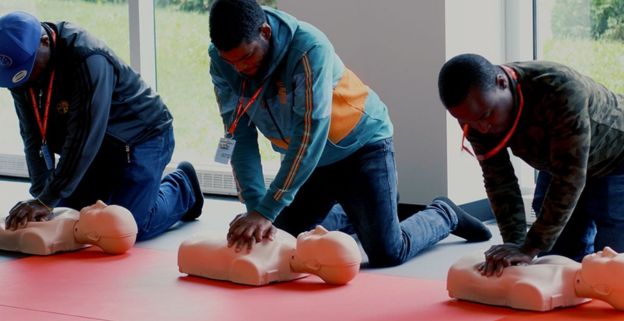
Plenty of people think CPR is just chest compressions, but in practice, it’s much more layered. The American Heart Association BLS Provider CPR Certification pushes participants to go beyond memorized steps. It builds intuition,recognizing early warning signs, calling for help effectively, managing airways, and coordinating with others while using an AED. Those aren’t things you learn from a manual. They’re built through repetition and guided correction.
Hospitals that take this training seriously tend to see measurable results: shorter “no-flow” times during cardiac arrests, higher survival rates, and fewer mistakes in chaotic moments. It’s hard to quantify something like collective calm, but anyone who’s watched a trained team respond knows what that looks like.
At CPR Fujahn, our instructors emphasize that precision doesn’t come from fear of doing it wrong; it comes from confidence built in safe practice. We design sessions that simulate the unpredictability of real code. People walk away a little tired, a little humbled, but a lot more capable.
Keeping Skills Sharp in a Changing Field
Medicine evolves quickly, and so do resuscitation standards. The American Heart Association regularly updates its guidelines, which means BLS certification isn’t a one-and-done achievement. Renewal of the American Heart Association BLS Provider CPR Certification keeps providers aligned with the most current science. It’s not bureaucracy,it’s maintenance for a skill that decays if neglected.
Hospitals that schedule regular renewal sessions see fewer skill gaps and better coordination during emergencies. CPR Fujahn makes that process practical by adapting sessions to hospital schedules, minimizing disruption while keeping entire teams compliant and ready.
A Certificate That Represents More Than Compliance
Getting a basic life support training certificate florida doesn’t just tick a box; it also changes how you think about things. The person who holds the job knows what it’s like to keep someone alive until aid arrives, and that impacts how they do their work. Hospitals are directly investing in the lives of their patients and the trust of their personnel by paying for continuing BLS training.
At CPR Fujahn, we see it as our responsibility to uphold that standard,to train professionals who aren’t just certified, but capable.
If your facility is ready to strengthen its emergency preparedness, visit our website to schedule hospital-based sessions and learn more about the American Heart Association BLS Provider CPR Certification.
Train for reality. Build confidence. Protect every heartbeat with CPR Fujahn.
Book a Consultation
It’s easy and free!